What Does Flat Towing Mean and How Does It Work?
Table of Contents

Introduction
Ever seen a car being pulled with all four wheels on the road?
That’s flat towing! It’s one of the most straightforward towing methods, often used by RV travelers who want to bring a car along for the ride. But how does it actually work, and is it safe for all cars?
What Is Flat Towing?
Flat towing, also known as “dinghy towing” or “four-down towing,” is when a vehicle is pulled behind another using a tow bar, with all four of its wheels on the road. Unlike flatbed towing, the car isn’t lifted—it rolls on its own tires.
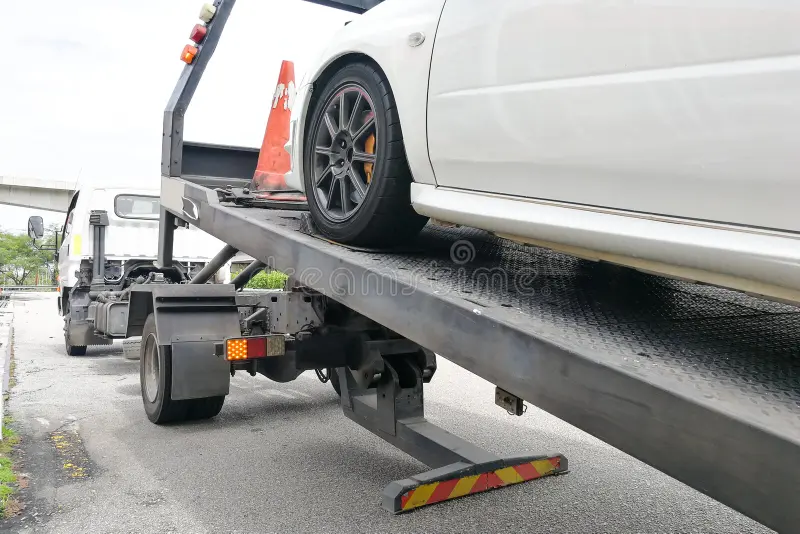
How Flat Towing Works
A tow bar is attached between the towing vehicle (like an RV) and the car being towed.
The car’s transmission is set to neutral so the wheels can rotate freely.
Safety chains and supplemental braking systems may be used for extra security.
Lights are connected so the towed car signals match the towing vehicle.
Vehicles That Can Be Flat Towed
Manual transmission cars – Many are suitable for flat towing.
Certain SUVs and trucks – Especially those with 4WD systems designed for it.
NOT all vehicles – Some automatic cars can suffer serious damage if flat towed.
👉 Always check your vehicle’s owner’s manual before attempting flat towing.
Pros and Cons of Flat Towing
Pros:
Simple setup with less equipment needed.
Lighter than using a trailer or dolly.
Convenient for RV travelers.
Cons:
Not suitable for all vehicles.
Adds wear and tear to tires.
Can be risky if not set up correctly.
Flat Towing vs Other Towing Methods
Flatbed towing – Safest method, car is fully lifted onto the truck.
Wheel-lift towing – Only two wheels lifted, often for short distances.
Flat towing – All four wheels on the ground, good for long-distance RV travel but limited to certain cars.
Safety Tips for Flat Towing
Double-check tow bar connections before every trip.
Ensure transmission and steering are in the correct setting.
Use auxiliary braking systems for added safety.
Inspect tires regularly during long trips.
How Professional Towing Services Can Help
Expert advice – Know if your car can be safely flat towed.
Proper equipment – Professionals use certified tow bars and safety tools.
24/7 assistance – Help is available if flat towing goes wrong.
Alternative options – Flatbed or wheel-lift towing if your car isn’t suitable.
👉 Contact Professional Towing Services for reliable flat towing and recovery support.
Did You Know?
Some RV enthusiasts call flat towing “RV freedom” because it lets them explore cities without driving the RV everywhere.
Cars with electronic transmissions often require modifications before they can be flat towed.
Supplemental braking systems are required by law in some regions when flat towing.
Conclusion
Flat towing is a convenient method for certain vehicles, especially for RV owners. But it’s not for every car. Understanding how it works, knowing the risks, and using professional towing services can make the process safer and stress-free.
FAQs
1. Can any car be flat towed?
No, only certain vehicles are designed for flat towing. Always check the manual.
2. Is flat towing safe for long distances?
Yes, if done correctly and with the right equipment.
3. Do I need special brakes for flat towing?
In many areas, yes—auxiliary braking systems are required for safety.
4. What’s better: flat towing or a tow dolly?
Flat towing is simpler, but a tow dolly works for cars that can’t be flat towed.
5. Should I hire professionals for flat towing?
Yes, if you’re unsure. Professionals ensure safety and prevent vehicle damage.
Book a Towing Service Today
🚗 Need help with flat towing or other towing methods?
🔧 Call our Professional Towing Service for expert, safe, and stress-free solutions.
📲 WhatsApp us today for fast assistance!
Travel with peace of mind knowing your car is in safe hands.


Komen